
You can’t bottle time, but you can save it – in a way. Examining block utilization for operating room allocation is a method that many ORs use to meet efficiency metrics while attracting surgeons, but it is not without challenges. How can you maximize surgeon performance and ensure a commitment to scheduling accuracy when each precious minute counts?
Block scheduling could be the answer. It’s more than just filling a calendar. The recipe requires a base of trusted systems, a sprinkle of diplomacy, and an extra helping of communication. Is your health system ready?
You Can’t Afford a Haphazard Approach to OR Scheduling
Perioperative administration often starts with examining total operating room utilization. Usage metrics impact revenue directly, and often determine the starting point for near-term staffing and capacity planning. To manage your surgical calendar more efficiently, block scheduling might be a worthwhile approach.
Block scheduling – assigning surgical time to individual surgeons or surgeon groups – is a common method of allocating the valuable hours of operating room time.
Blocks are generally given to surgeons with strategic importance to a hospital. Regularly-scheduled block times are important to individual surgeons, to clinical workflows, and to revenue. This makes their usage as important as total OR utilization, if not more, in some facilities where calendars are primarily filled with blocks.Some facilities have few or no blocks, while other perioperative suite calendars are largely blocked out.
Surgical blocks are reserved and allocated – typically in blocks of 8 to 12 hours - though blocks may vary based on length and type of surgeries. Blocks recur on a consistent schedule - commonly repeating each week - and frequently take place in the same room each time for ease of management.
Block utilization, then, is the associated measurement of how productive blocks of time are, based on usage within the block. To calculate a surgeon’s (or surgeon group’s) utilization, consider how many hours of cases are performed within their given OR block, including turnaround time.*
* In measuring block utilization, adjusted utilization is preferred to raw utilization. Raw utilization is the total hours of elective OR cases performed within block time divided by the hours of allocated block time. Adjusted utilization equals the total hours of elective cases performed within OR block time, including setup and cleanup time.
Underused blocks are a drag on facility-wide performance, since surgical suites are the core area of most hospitals. To make blocks work well for everyone – from patient to perioperative staff to turnaround teams and everyone in between – communication needs to be instant and data must be quick and actionable, optimizing efficiency so as to maximize utilization.
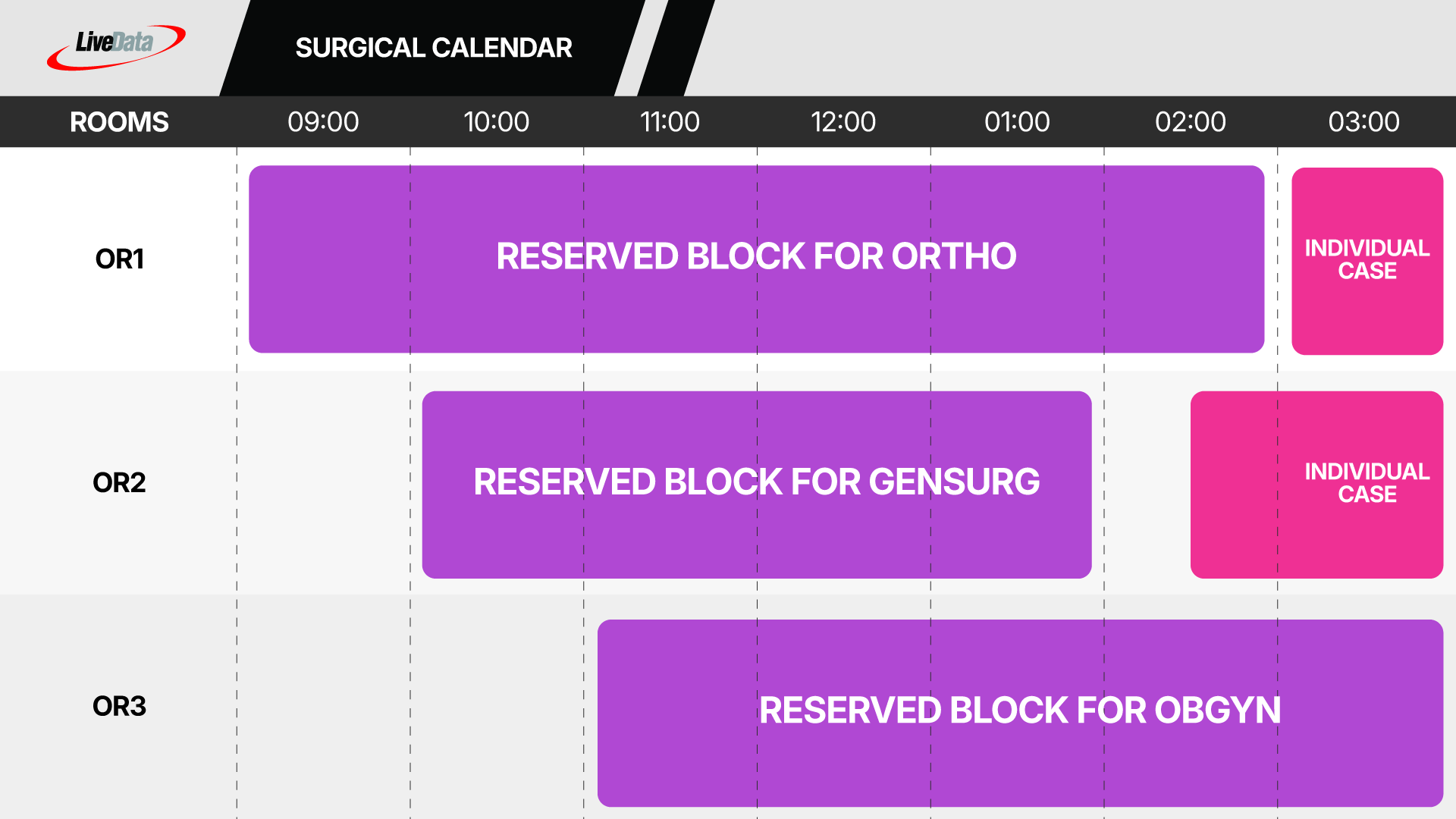
In some ways, block utilization is OR utilization in miniature. Total OR utilization is less important in some facilities than whether or not key blocks are being used at their highest capacity. Instead of looking at utilization on a whole hospital or literal case-by-case basis, focusing on block utilization allows for more efficient management that’s tailored to the needs of a specific hospital or ASC. Administrators can focus on specific surgeons or service lines to address this metric, instead of missing these details in the OR calendar as a whole.
But before you jump on board, keep in mind that scheduling is not a one-size-fits-all concept. Trauma centers may need one or more ORs held open at all times. Cases that predictably require very short or very long procedure times may need to be handled differently when blocks are assigned. High variability of surgery duration makes scheduling more challenging. And none of it works well if blocks are not managed with precision, from allocation to release.
Managing Block Utilization: How Will You Keep Your Blocks Cooking?
Is your operating room utilization governed by an explicit policy? If not, do you need one? If so, how is it implemented to ensure fairness and effective use of resources?
Factors to consider:
- Language matters. Are elements written as “must,” “should,” or variable?
- Who are the decision makers in real time? Do they have the information they need to be proactive?
- Who can make decisions about add-on cases?
- If a block is not being utilized, when will that time be released to other surgeons? Who decides and how is that communicated?
- Is there a policy specifically regarding block release, and is it followed?
- How will block utilization trends be monitored so their allocation is transparent?
- How often are you able to assess utilization of and within blocks?
Ideally, an interdisciplinary committee oversees block and OR utilization policies. All interest holders should be represented (including nursing, anesthesia, administration, and surgeons).
With comprehensive, accurate, and shareable data, the team can get a clear look at trends like delays and cancellations. An informed committee is well-suited to act on findings in order to allocate surgical time based on the complex needs of the hospital and the patients it serves, in line with a culture that values transparency.
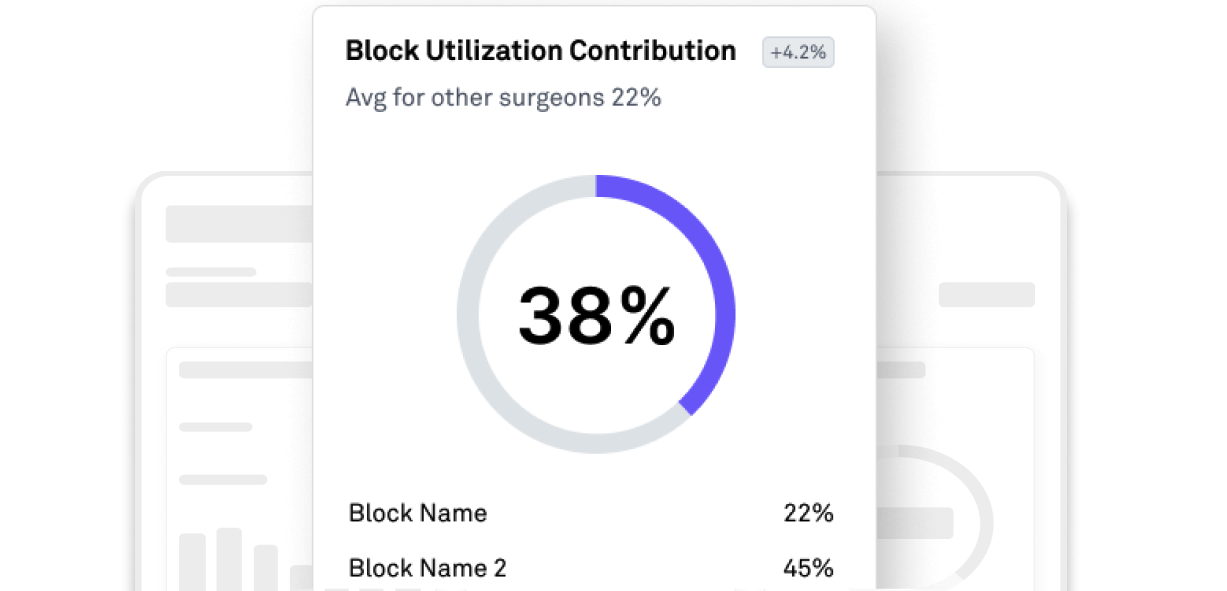 Consider how important those utilization findings are to making your policies work in real world applications. What are the patterns revealed in surgical utilization?
One example is a recent study that examined variability in OR utilization by day of the week. Does it matter? It could matter a great deal, as it turns out. The study showed that Mondays and Tuesdays were busy OR days. Fridays? Not so much. And an idle OR is not profitable.
Researchers found that OR utilization declined as the week progressed, which was attributed to compounding changes in late starts, delays, and idle time. “The average weekly cost for each OR associated with unused staffed minutes below a target OR utilization of 85% was $19,383, and the comparable lost weekly revenue was $60,256.”
Without ongoing access to actionable, reliable data, leadership is in the dark about critical usage trends. The pernicious problem of empty rooms, hidden within opaque blocks, can spread.
LiveData’s tools address this with tight EHR integration that surfaces trends in time. They’re reinforced by communication around the day of surgery, allowing for real-time visibility, flexibility, and proactive adjustments that fill your rooms and create a culture of empowered staff and managers with agile, high-impact tools.
Look Before You Leap
LiveData’s system of perioperative engagement enables the highest level of block utilization efficiency. Day-of-surgery boards foster communication with schedulers, perioperative teams, and providers around the day of surgery. LiveData Insights delivers surgeon scorecards and robust analytics that empower leadership to allocate those valuable hours effectively.
No matter how your system allocates surgical time, without an accurate look at what is actually happening, even the most earnest policies are just wishful thinking. But if you get the recipe just right, everyone benefits. Still looking for that secret ingredient? LiveData can help you find it.
Sources (accessed February 2026):
- Improving operating room productivity and efficiency – are there any simple strategies? https://pmc.ncbi.nlm.nih.gov/articles/PMC5642860/
- Determining optimum operating room utilization https://pubmed.ncbi.nlm.nih.gov/12651670/
- Operating Room Utilization and Surgical Throughput Analysis https://umbrex.com/resources/industry-analyses/how-to-analyze-a-healthcare-provider/operating-room-utilization-and-surgical-throughput-analysis/
- Retrospective Analysis of Associated Costs and Sources of Variability in OR Utilization Across Weekdays http://doi.org/10.1002/aorn.14164
- Block schedule best practices: Calculate, allocate, and regulate https://www.ormanager.com/block-schedule-best-practices-calculate-allocate-regulate/
- A few simple rules for managing block time in the operating room https://www.ormanager.com/wp-content/uploads/pdfx/001/ORMVol20No11blockTime.pdf
- It Takes the Entire Team to Streamline Turnover Times https://www.aorn.org/outpatient-surgery/article/it-takes-the-entire-team-to-streamline-turnover-times
Latest from the Blog
Stay up to date with our latest insights, tips, and industry news.